


AN ANTHOLOGY BY NAIJ & FOJO
Futures of
Journalism
Building on ideas shared at the Nordic AI in Media Summit (NAMS) 2026, this anthology comprises visions from leading industry voices on what journalism may become when the emergence of an AI-mediated information system reshapes how editorial media is made, valued and consumed. Read, reflect, act – we urge you to play an active role in shaping what comes next!
Read the essaysFeatured writers
The essays
The responsibility to imagine what’s next
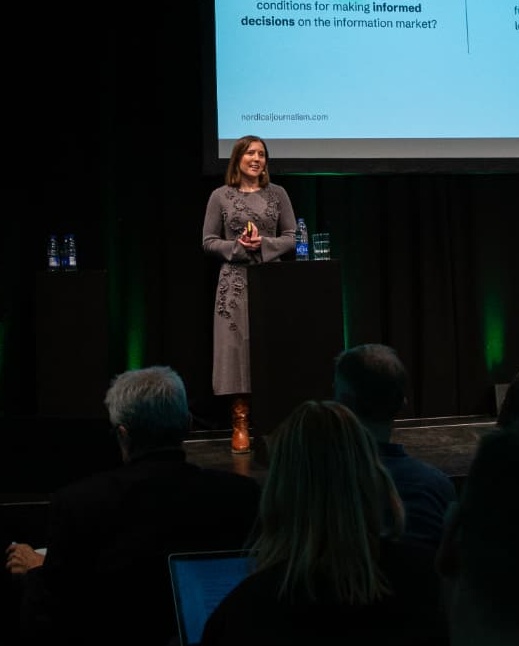
Journalism has never been short of people willing to explain what is wrong with it. This anthology seeks to go beyond diagnosing problems to offer visions of what may come next. In this introduction, project initiator and lead Agnes Stenbom Swedling (Strategic Advisor, Schibsted and Co-founder, Nordic AI Journalism) argues that editorial media has a responsibility to imagine desirable futures – and act towards them.
Agnes Stenbom Swedling
The information revolution will not be televised
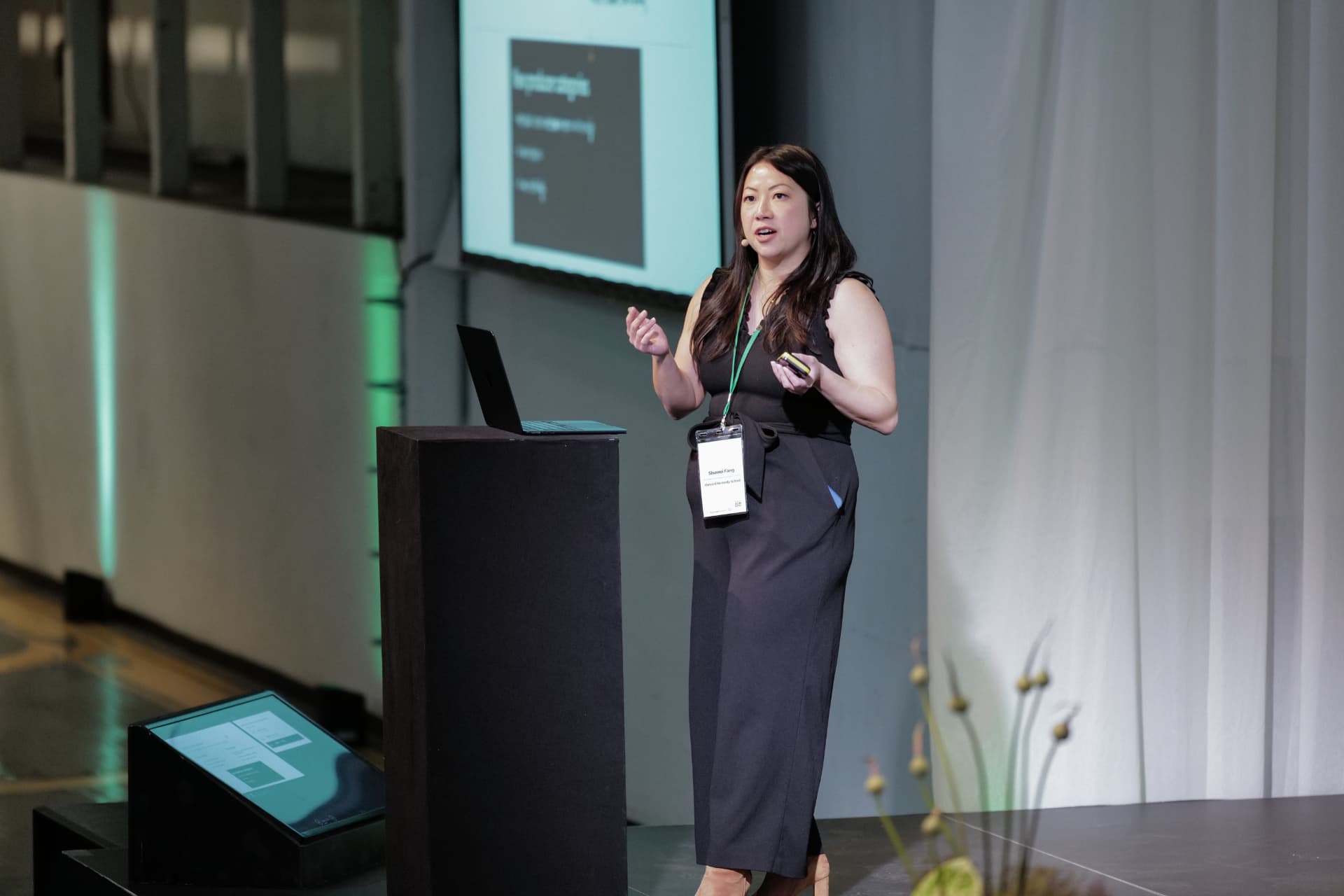
What happens to journalism when information is increasingly consumed by machines? In this essay, Shuwei Fang (Co-founder, Signals at Scale; 25-’26 Shorenstein Fellow, Harvard Kennedy School; Senior Fellow, CUNY-Newmark) explores the emergence of an agentic information economy, where journalistic knowledge becomes input to decisions and actions rather than a finished product for human consumption. She argues that journalism has an opportunity to reinvent itself as a vital part of the infrastructure that makes this new economy trustworthy and accountable.
Shuwei Fang
Four different responses to public skepticism around AI in news
How should journalism respond when the public is more sceptical of AI in news than journalists might like to believe? Drawing on international audience research, Rasmus Kleis Nielsen (Professor of Communication, University of Copenhagen and Senior Research Associate, Reuters Institute, University of Oxford) outlines four possible responses to AI, ranging from reluctant non-adoption to openly embracing technological transformation. He argues that the most important choice is not necessarily how much AI newsrooms use, but whether they can explain their decisions and maintain the public's trust.
Rasmus Kleis Nielsen
Journalism as Science
What if the future of journalism requires us to fundamentally rethink what journalism is? In this essay, David Caswell (Co-founder, Signals at Scale) challenges the profession's humanistic traditions and argues for the emergence of a parallel, scientific form of journalism. Drawing on the distinction between humanistic and scientific cultures, he makes the case for embracing AI-driven, systematic approaches to producing and verifying information, while preserving journalism's democratic mission.
David Caswell
Towards sustainable publisher models for the AI-driven information ecology
Where will news publishers create and capture value when AI fundamentally reorganises the information economy? In this essay, Kasper Lindskow (Head of AI, JP/Politikens Media Group and Co-lead, Nordic AI Journalism) explores how journalism might evolve from producing finished media products to originating, maintaining and commercialising trustworthy knowledge. He proposes three emerging strategic positions for publishers, and a model for combining them to build sustainable businesses in an AI-driven information ecosystem.
Kasper Lindskow
The next era of journalism will be defined by service, not publication
What if journalism's greatest AI opportunity lies not in producing more content, but in becoming a more useful public service? In this essay, Nikita Roy (Founder, Newsroom Robots Lab) challenges the idea that journalism's responsibility ends at publication. She envisions newsrooms that organise their work around the questions people need answered, using AI to build lasting, accountable services that help the public understand what matters, what has changed and what happens next.
Nikita Roy
Journalism with room to move
Can journalism become more personalised and useful without taking away our freedom to think, question and discover? In this essay, Ezra Eeman (AI & Innovation Director, WAN-IFRA and Founder, Wayfinder) explores the possibilities of AI-powered journalism that helps people act on information while preserving space for curiosity, surprise and independent judgement. He introduces the idea of the story that acts, arguing that the best future news experiences may be those that know when to help, when to pause and when to leave people alone.
Ezra Eeman
The noble art of flogging dying horses
How do you lead a news organisation through a transformation when nobody knows what the future holds? In this essay, Gard Steiro (Editor-in-Chief, VG and SVP News Media, Schibsted) draws on sinking ships, dying horses and his own experience of leading one of the Nordics' largest newsrooms to argue for a culture of constructive paranoia. He offers ten concrete moves that media leaders can make today to prepare their organisations for an uncertain, AI-mediated future.
Gard Steiro
Look beyond the AI tools
What if the biggest obstacle to journalism's future is not technology, but the way we organise newsrooms today? In this essay, Martin Schori (Co-founder, Hint Media) imagines a newsroom in 2032 where AI handles routine information production while journalists focus on judgement, distinctive voices and relationships with their communities. He argues that real transformation requires rethinking editorial roles, recruitment and incentives, rather than simply introducing new tools into old workflows.
Martin Schori
From low adoption to real enablement – a journey
What does it take for AI to serve as meaningful, value-creating tooling in a newsroom? In this essay, Olle Zachrison (Head of News AI, BBC News and Co-founder, Nordic AI Journalism) confesses organisational sins committed in the pursuit of scaling AI in public service media, and shares tangible lessons and advice for moving beyond a focus on shiny new things to promoting wide-scale, organisational enablement.
Olle Zachrison
Futures friction: a new approach to how media organisations remember, learn and reimagine
How might media organisations better build on collective learnings in pursuit of innovation? In this essay, Sofie Hvitved (Director of Media Futures & Innovation, Copenhagen Institute for Futures Studies) explores how second brains can make organisational knowledge accessible across teams, and how futures friction can help teams question and develop their ideas. She explores how AI-supported organisational memory and deliberate challenges to established assumptions can help newsrooms learn from past experiments and imagine futures beyond today's strategic constraints.
Sofie Hvitved
Rewiring organisations starts in our heads
What if reinventing journalism starts not with new technologies or organisational structures, but with changing how we think? In this essay, Sara Inkeri Vardar (Innovation Manager, JP/Politikens Media Group and Co-lead, Nordic AI Journalism) reflects on the psychological and cultural barriers that prevent media organisations from challenging their own assumptions. Drawing on personal experiences and research into innovation, she argues that curiosity, psychological safety and the courage to ask seemingly stupid questions may be among the most important capabilities for the newsrooms of tomorrow.
Sara Inkeri Vardar
Prefer an analogue experience?
Download the full anthology including all essays!
Download as an AI knowledge base
A zip of all essays as structured markdown files, ready for AI tools.
NAMS26 in short
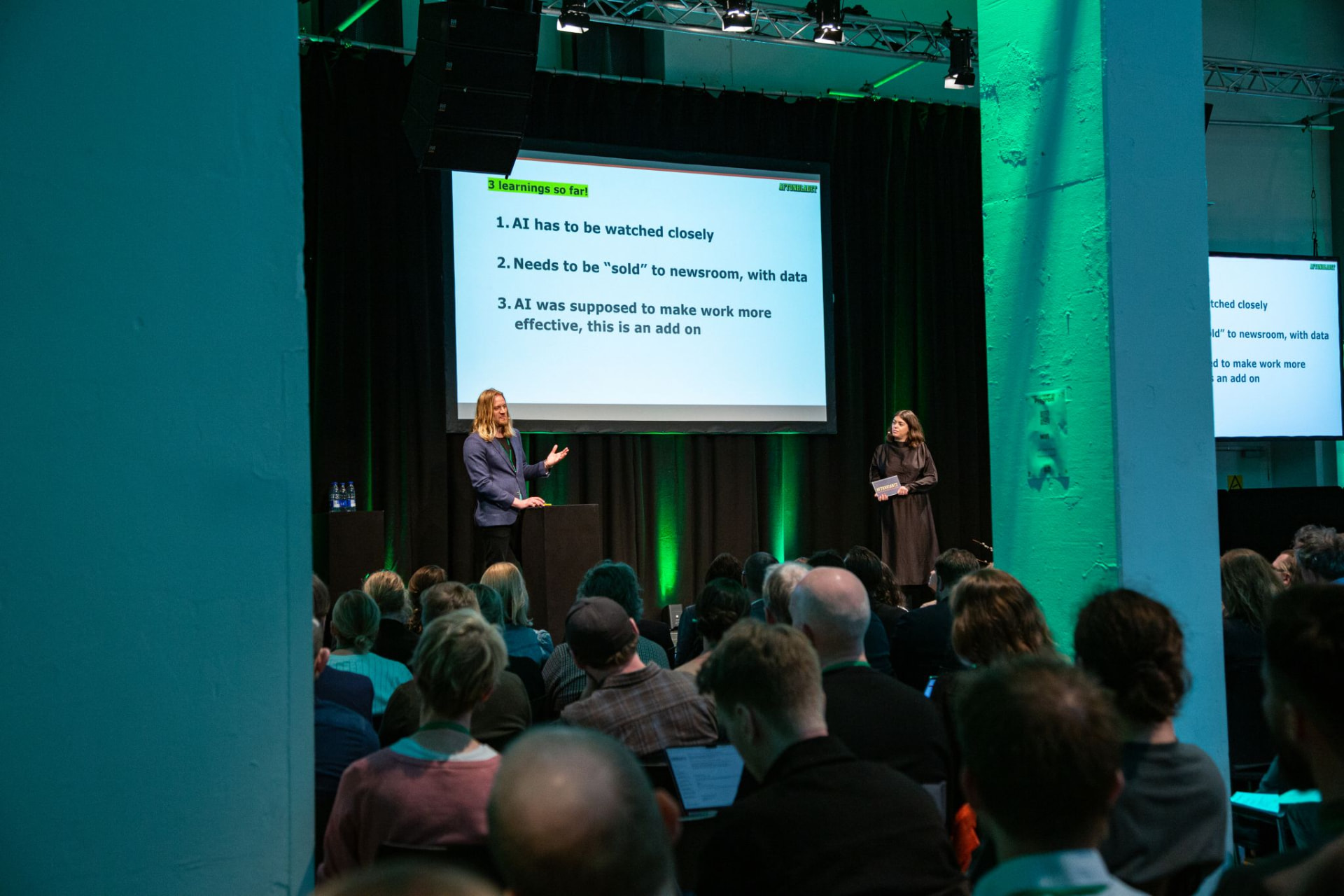
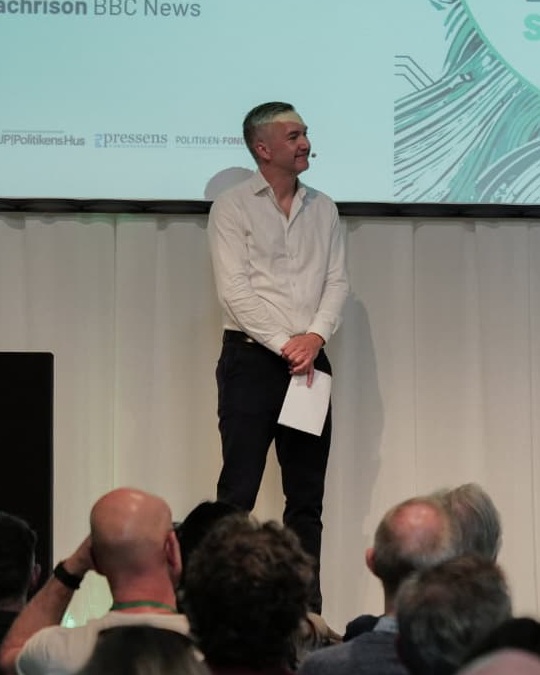
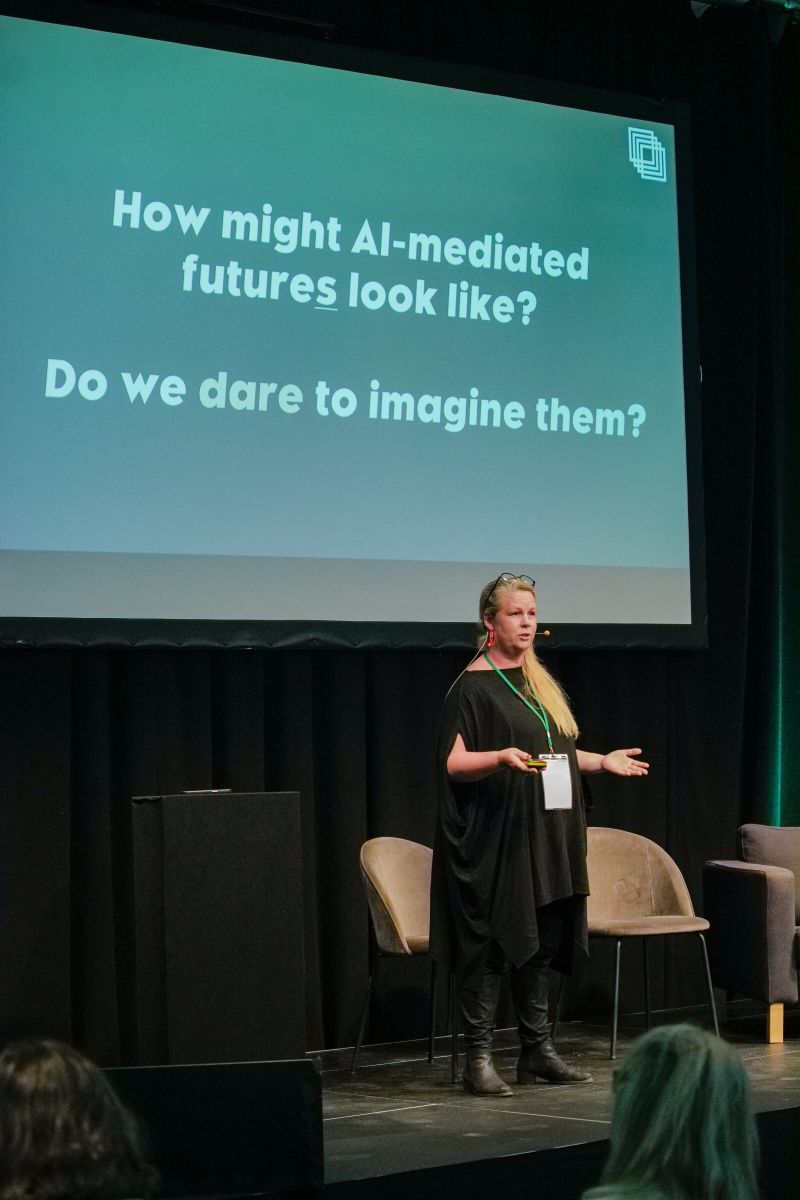
This anthology builds on ideas shared at the Nordic AI in Media Summit in Copenhagen in May 2026. Recordings of the keynotes and cases shared at the summit are available here.
A Nordic collaboration
About this anthologyFutures of Journalism brings together practitioners and researchers from across and beyond the Nordic region. It is published by Nordic AI Journalism, an industry network seeking to advance responsible AI in journalism, together with Fojo Media Institute.
Curious about NAMS27?
Mark your calendar for June 1–2, and make sure to follow Nordic AI Journalism on LinkedIn for the latest updates on ticket releases.